Dog Nutrition
Understanding Dog Food Labels: A Veterinarian’s Guide
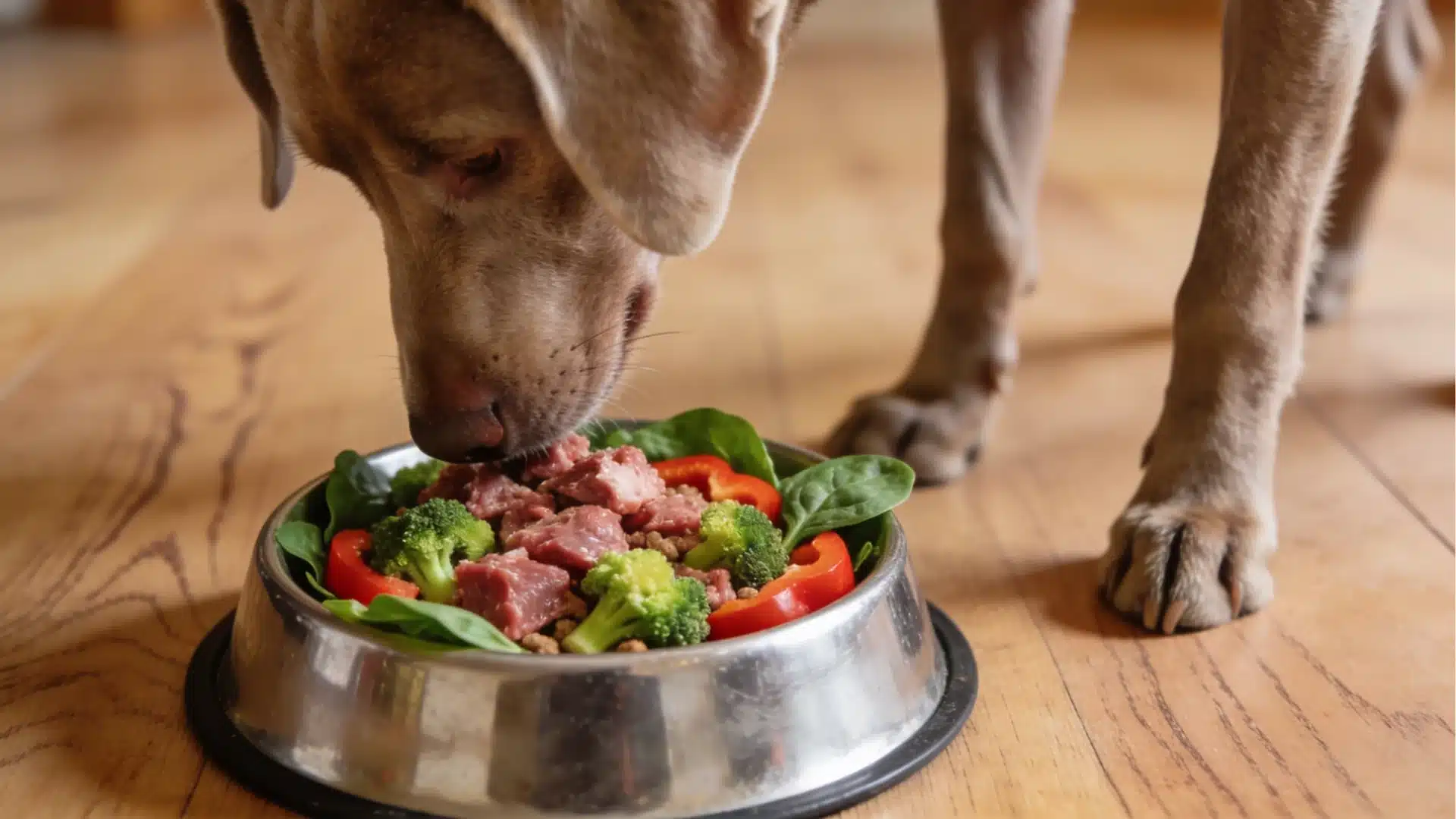
Marketing on the front of the bag tells you very little. The nutritional adequacy statement, ingredient list and guaranteed analysis on the back tell you almost everything.
Dog food packaging is designed to sell. Words like ‘natural’, ‘holistic’, ‘gourmet’ and pictures of wolves and fresh salmon are marketing, not nutrition. The genuinely useful information is in small print on the back — and once you know how to read it, choosing a food becomes much less confusing.
1. The nutritional adequacy statement — read this first
This is the single most important line on the bag. It tells you whether the food is complete and balanced and for which life stage: growth (puppies), adult maintenance, all life stages, or supplemental feeding only. A food labelled ‘for intermittent or supplemental feeding only’ is a treat or topper, not a diet. Look for a statement referencing AAFCO (North America) or FEDIAF (Europe) standards, and note whether the food was validated by feeding trials — the strongest evidence — or formulated to meet nutrient profiles on paper.
2. The ingredient list — useful, but easy to misread
Ingredients are listed by weight before cooking. Fresh meat contains a lot of water, so ‘chicken’ can top the list while contributing less protein after processing than a meat meal listed second. Splitting tricks — listing ‘rice’, ‘rice flour’ and ‘rice bran’ separately — can push cereals down the list artificially. Named ingredients (‘chicken meal’) are more transparent than generic ones (‘meat meal’). By-products, despite their reputation, are regulated, nutrient-rich ingredients such as organ meats; quality depends on the manufacturer’s standards, not the word itself.
3. The guaranteed analysis — percentages with a catch
Protein, fat, fibre and moisture percentages are minimums and maximums, not exact values, and they are listed ‘as fed’ — including water. To compare a wet food (75% moisture) fairly with a dry food (10% moisture), convert to dry matter: divide the nutrient percentage by (100 − moisture %) × 100. A wet food at 8% protein and 75% moisture is actually 32% protein on a dry-matter basis.
4. Feeding guides and calories
Check the calorie content (kcal per cup or per 100 g). Feeding guides are starting points for an average dog — many pet dogs need 10–20% less. Your dog’s body condition is the real test: adjust portions to keep them lean (see our body condition guide).
Red flags and green flags
- Green: a clear adequacy statement for your dog’s life stage, a named manufacturer with a phone number, feeding-trial validation, and a company that employs qualified nutritionists.
- Red: no adequacy statement, ‘supplemental only’ sold as a main food, vague ingredient terms, and health claims that sound like drug claims.
Finally, match the food to the dog in front of you: age, size, activity, neuter status and medical conditions all matter more than trends. When in doubt, bring the bag — or a photo of the back label — to your next vet visit.
Frequently asked questions
What is the most important thing on a dog food label?
The nutritional adequacy statement. It confirms the food is complete and balanced and names the life stage it suits. Without it, you cannot know the food meets your dog’s basic nutritional needs.
Are by-products bad in dog food?
Not inherently. By-products include organ meats that are highly nutritious. What matters is the manufacturer’s quality control and sourcing standards, not the word itself.
How do I compare wet and dry dog food fairly?
Convert protein and fat to a dry-matter basis: divide the listed percentage by (100 minus moisture percent), then multiply by 100.